

The Shipping Illusion
What You Think Is Happening vs What Actually Is (And What It's Costing You)

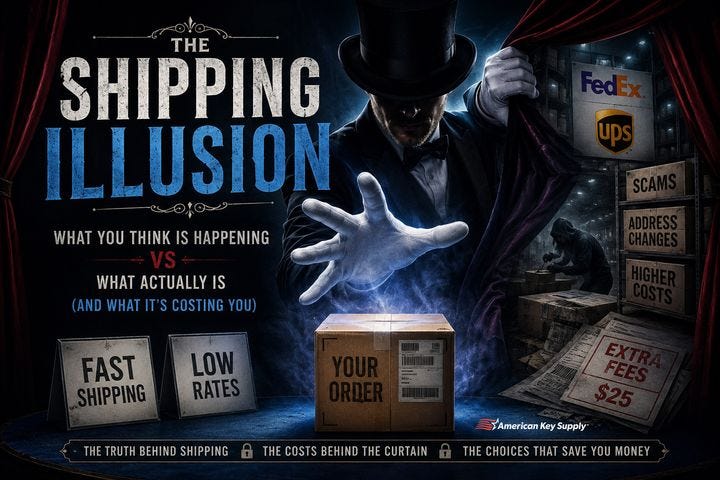
Behind every label is a system built on negotiation, volume, risk, and sometimes—damage control. Though, if you don’t understand how it works…it can cost you.
Welcome to the Show
Step right up.
Place your order.
Choose your shipping.
Watch it arrive!
Simple, right?
It feels like magic.
However, like any good illusion…what you see isn’t what’s really happening.
The Setup
For my first trick, I present to you the illusion of choice!

Pick a carrier…any carrier…
UPS? FedEx?
Whichever one you think is better—the choice is yours.
Now watch closely.
I’m going to shuffle things around… switch a few pieces…
and let’s see if you can still tell which one is “better.”
In this business…things aren’t always what they seem.
“We used to use UPS. Then we switched to FedEx and got much lower rates. Then we switched to UPS and got much lower rates. Then back to FedEx and got even lower rates. Every time we’ve switched carriers, we’ve gotten complaints—no matter which one we chose. Almost every issue we’ve investigated has come down to a bad driver in a specific area.” — Cary Stevens, President of AKS
Customers benefit the most from lower rates, which in turn becomes the goal—to provide the best rates and the fastest shipping. This is exactly why American Key Supply offers their $15 overnight shipping option.
But here’s where the illusion starts to break.
No matter which carrier is chosen…
there’s one variable that never shows up on the label—the driver.
Most shipping issues don’t come from the company. They come from the last mile—the person delivering the package. If a customer experiences issues with drivers in their area, providing details and tracking numbers is the necessary step to aid in and prevent these issues. Calling the shipping company or going online simply to complain, does nothing to correct the issue.
Once a package leaves our facility, it enters the carrier’s system. At that point, delays, missed deliveries, and routing issues are no longer controlled at the distributor level.
That doesn’t mean they’re ignored. It means they need to be handled the right way. No matter which logo is on the truck, these issues will happen. The difference between a recurring problem and a resolved one comes down to how it’s reported—and what’s done with that information.
Tracking numbers.
Specific incidents.
Clear reporting.
Once we have that, we don’t guess…
We escalate.
The Turn
For my next trick, I’m going to make this package disappear!
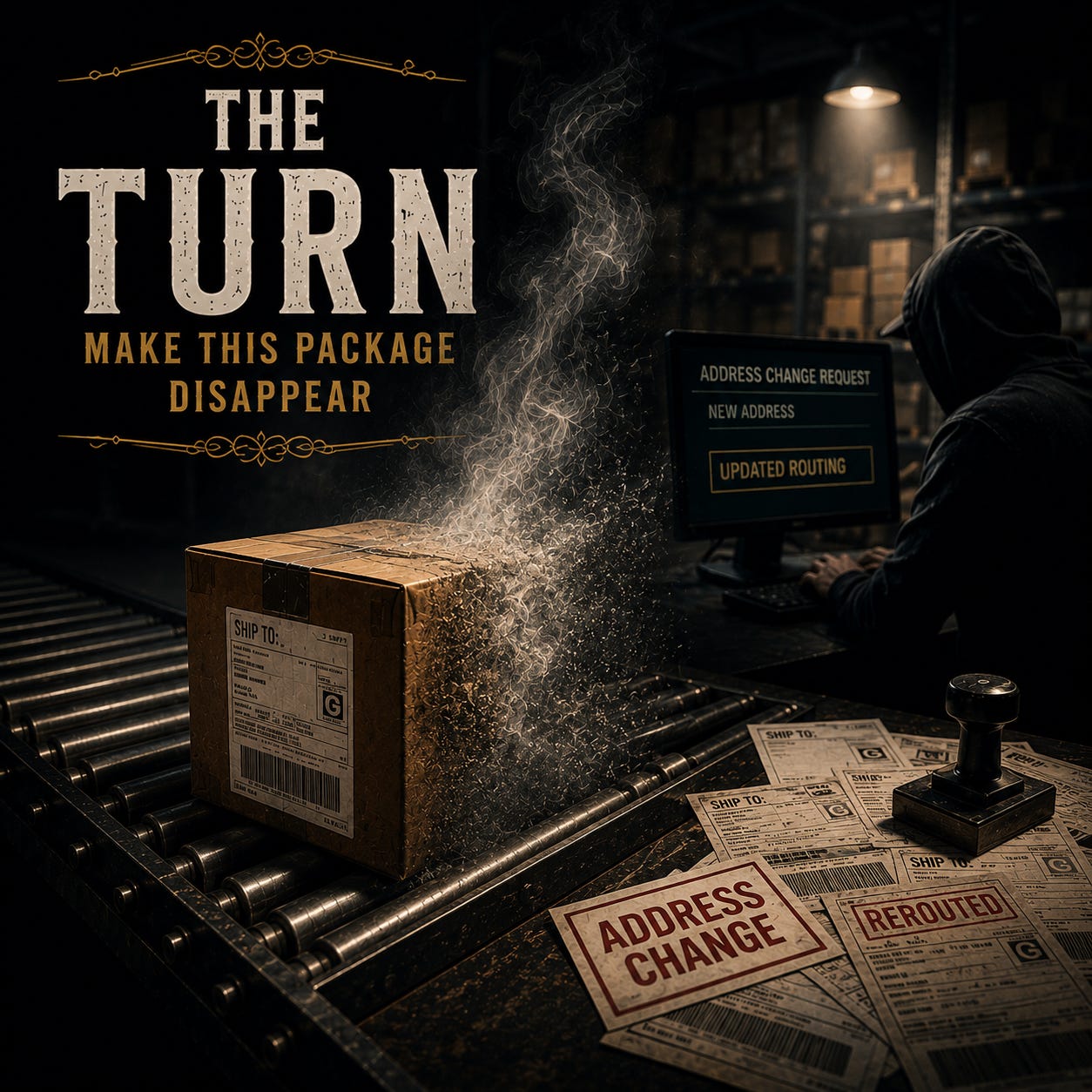
There are a lot of scammers in this industry. They are not just scamming the public, they are scamming suppliers too. And the methods keep evolving.
New loopholes. New workarounds. New ways to steal.
“One of the earliest ways we lost tens of thousands of dollars in product was through stolen credit cards. The orders would get through fraud detection by using a shipping address that matched the billing address. Then they’d call the shipping company and change the address while the package was already in transit.
I once had to drive to California to intercept a shipment of Autel programming machines headed for Somalia.
As a family-run business, that theft comes directly out of my bank account.”
— Cary Stevens, President of AKS
That’s the part most customers never see. To them, changing an address mid-shipment might seem like a simple request. Even legitimate address changes often come with penalties charged to the distributor—typically around $25 per reroute request.
One request? Not a huge deal.
Hundreds over time? That adds up quickly.
Those costs don’t disappear. They affect the distributor’s ability to continue offering affordable shipping options in the first place.
Distributors like American Key Supply invest heavily in getting packages out quickly, accurately, and affordably—but once those shipments leave the building, the road between pickup and delivery becomes unpredictable.
Scammers. Driver issues. Weather delays. Transportation problems. Mishandled packages. Not every variable can be controlled, and not every disappearing package is magic.
Sometimes things just take an unexpected turn.
The Prestige
The final act. The hardest part of any illusion… The reveal.

Because eventually, every audience asks the same question:
Why not both?
Why not offer FedEx and UPS?
Why not let the customer decide?
Seems simple enough… but is it?
“Shipping rates are completely based on volume. If we split rates between both companies, your shipping would be significantly higher.”
Shipping companies don’t reward loyalty. They reward leverage.
Leverage comes from volume. The more packages moved through a single carrier, the stronger the negotiating power becomes. Lower rates. Better pricing. Better programs.
Split that volume in half…and the illusion starts to fall apart.
“Priority Overnight shipping in an envelope costs us between $22–26 typically, and we subsidize that by around $10 to offer our customers $15 overnight shipping. With half the volume, that would increase by at least $10–15.” — Cary Stevens, President of AKS
Volume creates leverage. Leverage lowers pricing.
Once that leverage disappears…so do the rates customers have come to expect.
Sometimes the trick isn’t choosing between two hands. It’s understanding where to place your cards.
The Final Curtain
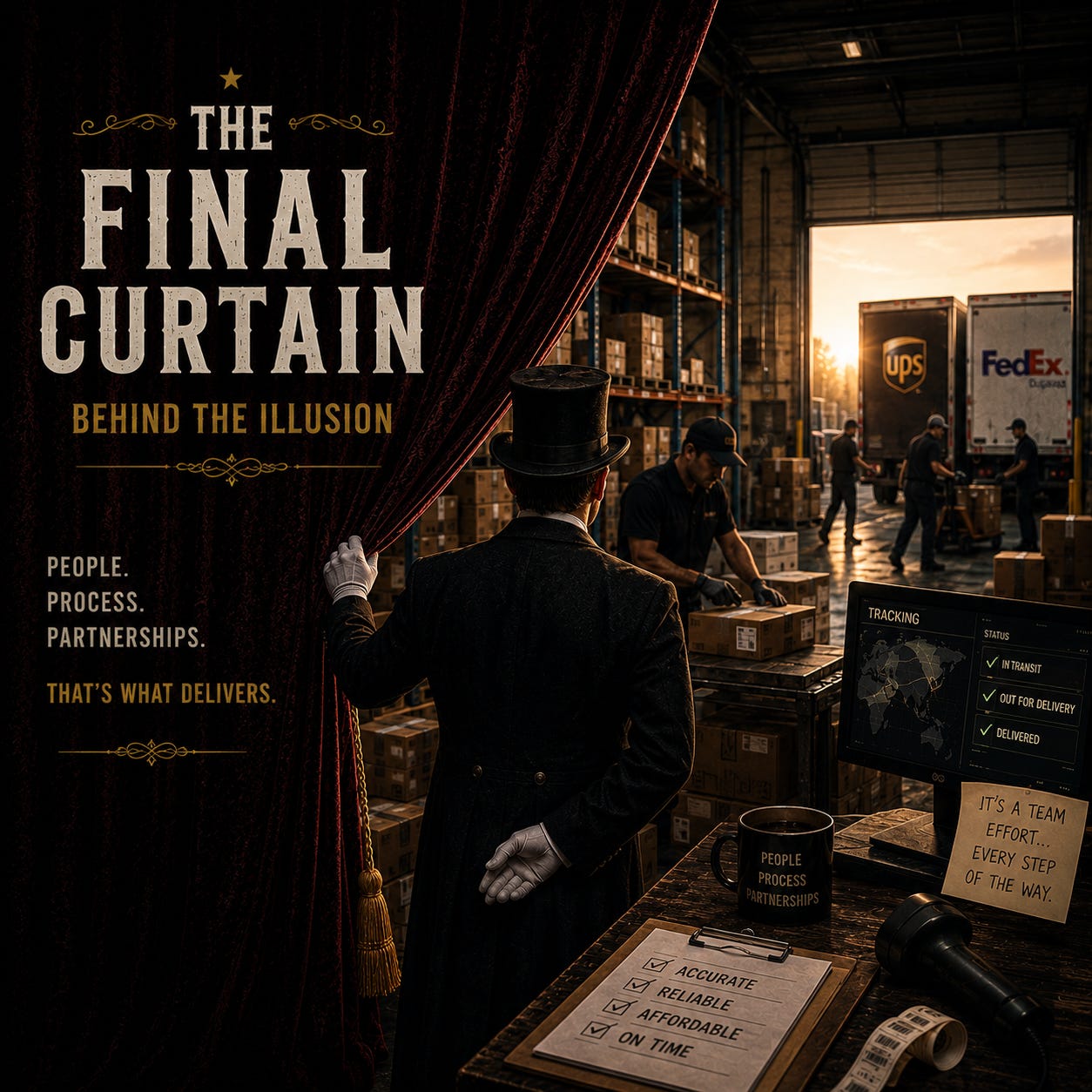
The truth is—shipping isn’t magic. It just looks that way when it works.
Behind the curtain, it’s constant negotiation, protection against fraud, and decisions designed to keep costs down for everyone. It’s correcting issues, streamlining, and working to improve practices and minimize error.
So the next time something looks off, or something doesn’t go according to plan…
Don’t just assume the whole show is a flop. Tell us what you saw and let us work our magic to help make your experience more spectacular.
Sometimes… fixing the illusion starts with the audience.
-Ryan Barbin, AKS
